REVIEW · SAITAMA PREFECTURE
Mt. Fuji and Hakone Private Tour with English Speaking Driver
Book on Viator →Operated by KHANZ JAPAN TOURS · Bookable on Viator
Fuji photos start with timing. This private 10-hour day trip links iconic viewpoints with smooth, English-friendly guidance. I like the chance to view Mt. Fuji from multiple angles (Oshino Hakkai, the 5th Station area, Lake Kawaguchiko, and Hakone’s Lake Ashi) and I also like that you get a real driver-guide feel—not just someone who drops you off. One thing to plan for: visibility depends on weather, and winter access can affect the 5th Station drive route.
A private format matters here. You’ll move through stops efficiently in an air-conditioned vehicle, with parking fees handled, and you’ll get dropped off back at your hotel by about 6:30pm. The tour is priced per group up to five, so it can be a smart value when you’re splitting costs, but it may feel steep if you’re traveling solo.
In This Review
- Key highlights to know before you go
- Private English driver-guide: the real value is how you move
- Price and deal math: $540 per group up to 5 people
- Timing and logistics: what a 10-hour Fuji day really feels like
- Oshino Hakkai and Diamond Fuji: the calm start that can steal the show
- Fuji 5th Station: best views, plus real access limits to understand
- Lake Kawaguchiko and Oishi Park: flower timing makes a difference
- Arakurayama Sengen Park and Chureito pagoda: plan for the stairs
- Lake Ashinoko in Hakone: scenic water and time for options
- Gotemba Premium Outlets: useful extra time if shopping matters
- Who this tour suits best
- Should you book this Mt. Fuji and Hakone private tour?
- FAQ
- What time does the tour start, and when do we get back?
- How long is the Mt. Fuji and Hakone private tour?
- What does the $540 price include for a private group?
- Is lunch included?
- Are entrance fees included at every stop?
- Can I cancel if plans change?
Key highlights to know before you go
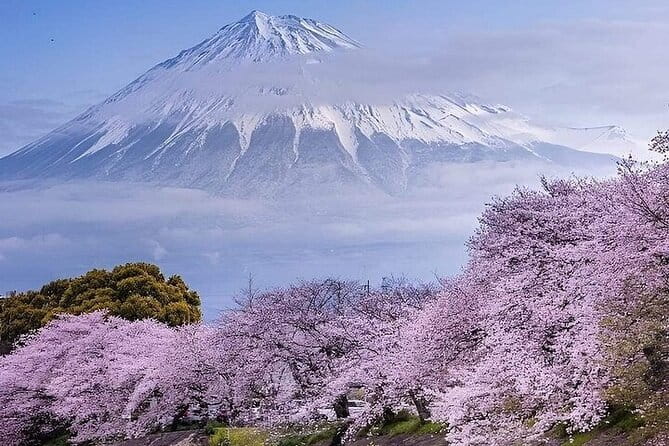
- English-speaking driver-guides who help you find strong photo spots and work around tricky weather (rain or overcast).
- Oshino Hakkai plus Diamond Fuji potential in winter, when the sun alignment can create a dramatic effect from certain angles.
- Fuji 5th Station access by car (with real-world notes about the Subaru Line toll road, winter snow, and seasonal private-vehicle limits).
- Lake Kawaguchiko viewpoints paired with easy park time at Oishi Park, which changes its flower show by season.
- Arakurayama Sengen Park + Chureito pagoda payoff after a long stair climb, with Mt. Fuji views at different elevations.
- Lake Ashi in Hakone, with the option to consider a classic cruise depending on how your day is paced.
Private English driver-guide: the real value is how you move
This tour is private, so you’re not stuck following a big bus rhythm. That matters on a day like this, where traffic and weather can change minute by minute. You start at 8:30am, and you’ll be back at your hotel by about 6:30pm, which is a long day—but it’s built for maximum viewpoints.
The best part is the driver-guide role. Some of the English-speaking guides you might be matched with, like Hassan, Bilal, or Shan, are described as more than transport: they help with photo angles and adapt when the sky doesn’t cooperate. If your day is rainy or cloudy, it’s reassuring to have someone who can suggest alternate spots rather than hoping for a perfect forecast.
You can also read our reviews of more private tours in Saitama Prefecture
Price and deal math: $540 per group up to 5 people
The price is $540.00 per group (up to 5), not per person. So the cost per traveler drops fast if you can bring friends or family.
- Up to 5 people: $540 ÷ 5 = about $108 per person
- Solo or two people: it effectively becomes a much pricier private ride
Also, the tour includes parking fees and uses an air-conditioned vehicle. Lunch is not included, and the Mount Fuji 5th Station admission is not included, so you should budget for meals and any paid experiences you add at stops.
If you’re traveling with a small group and you care about efficiency (photo time, viewpoints, less stress), the pricing can make sense. If you’re flying in with light plans and want to hop around freely, you might find cheaper options—but you’d be trading away the “one car, one route, one plan” comfort.
Timing and logistics: what a 10-hour Fuji day really feels like
You’ll start at 8:30am. The itinerary is designed for long viewing stops, but it’s still a lot of movement—especially if you do all stair-and-walk sections. You’ll also want to dress for changing mountain weather, even in warmer months. Layers win here.
Your pickup is described as being available, and the meeting point is near public transportation. Practically, that usually means the operator can coordinate a convenient start even if you don’t have a perfect hotel-to-door pickup option.
And yes, roads can be tricky. The Fuji area can bring winter snow closures, and the 5th Station access route has seasonal rules (more on that next). A private driver helps because route adjustments are possible without you re-planning the whole day.
Oshino Hakkai and Diamond Fuji: the calm start that can steal the show
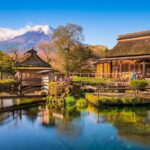
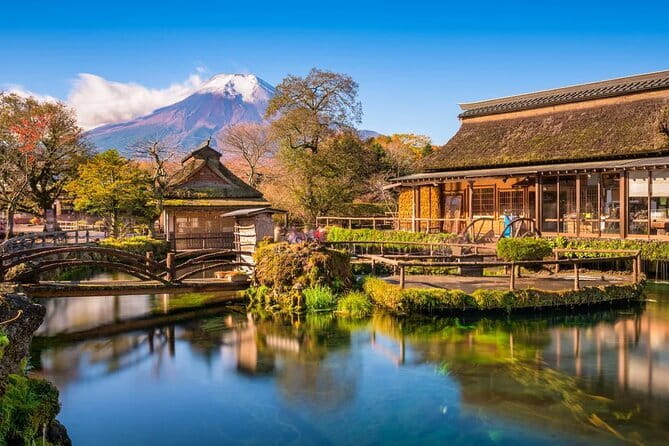
Oshino Hakkai is one of those places that feels quiet but important. These eight springs in Oshino are fed by aquifer water from Mount Fuji, and the area is tied to the Mount Fuji World Heritage designation. On a clear day, it’s scenic and relaxing; in winter, it can become much more photogenic.
The star here is the winter Diamond Fuji possibility. The idea is that the rising or setting sun lines up with Mt. Fuji’s peak in a very specific way, creating a “sun framed by the mountain” effect. You can only catch it from certain locations, so it’s less like a guarantee and more like a high-reward scenario.
You’ll spend about an hour here. Around the largest pond is the Hannoki Bayashi Shiryokan, described as a small open-air museum area. The good news: your stop time is built for photos and a short walk, not a rushed sprint.
Fuji 5th Station: best views, plus real access limits to understand
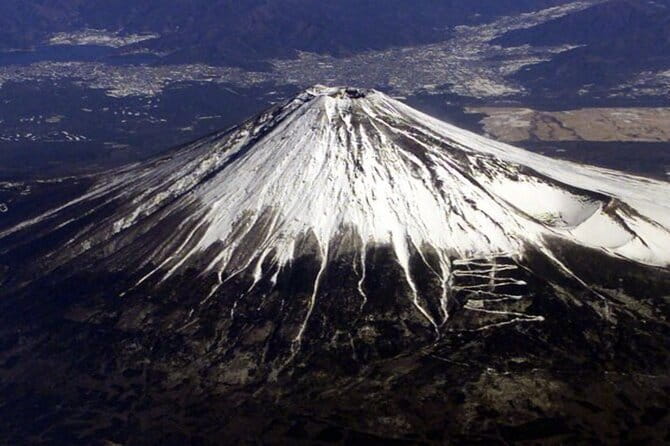
The Mt. Fuji 5th Station is the highest peak area you can reach by car (about 2,200m). Even if you don’t plan to hike, it’s a prime “closer to the top” viewpoint. From the station viewpoints, you can also see sweeping city and valley views.
Two practical points matter a lot:
First, the road up is via the Fuji Subaru Line, a scenic toll route. The toll is listed as 2,100 yen, and in winter the road may be partially closed due to heavy snow.
Second, during the main climbing period (July 5 to September 10, 2024), access is restricted: the road is closed to private vehicles for much of the season, and shuttle buses operate between parking lots at the base and the 5th Station.
This tour includes about an hour at the stop. Since the 5th Station admission is not included, you should expect to pay any entry-related fees you’re asked for on site.
If visibility is poor, don’t panic. The driver-guide approach helps: you’ll often find spots nearby where the light and clouds make for better photos than the obvious viewpoint.


Lake Kawaguchiko and Oishi Park: flower timing makes a difference
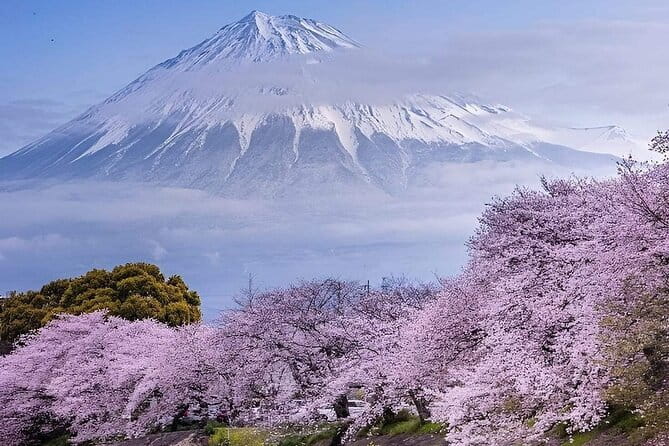
Lake Kawaguchiko is one of the best ways to frame Mt. Fuji in the same shot as water. From here, you can enjoy classic Fuji views and work in a few extra scenic options depending on what you want to spend time on.
Your time budget here is about an hour. The area also has the Kachi Kachi Ropeway, which goes up to an observation point near Mount Tenjo. The ropeway itself isn’t described as included, so if you want it, treat it as an add-on you may pay for.
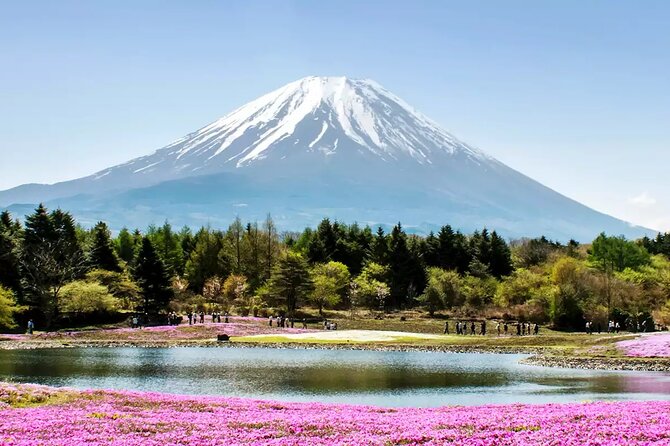
Next up is Oishi Park on the north shore. This is where the views get more “walkable.” The park has a 350m walking path, and the flower displays shift by season:
- Early April to late May: moss phlox like a pink carpet
- Late June to late July: lavender bloom
- Mid to late October: kokia turns red
Even if flowers aren’t in season, you still get that strong Fuji-and-lake composition. Oishi Park also links to the Kawaguchiko Natural Living Center, where there are hands-on options like fruit jam making and an all-you-can-eat cherry and blueberry picking course. There’s also a café where you can try blueberry ice cream.
Since your tour lists admission for these stops as free, the paid activities—if you choose them—would be your decision, not something baked into the ticket.
Arakurayama Sengen Park and Chureito pagoda: plan for the stairs
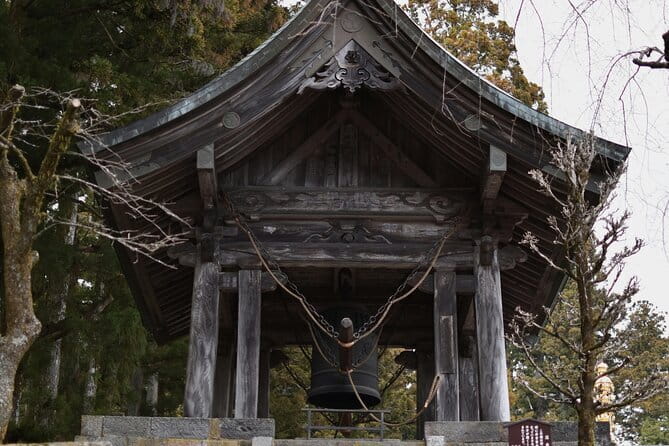
Arakurayama Sengen Park is a peace memorial park with Shinto shrines. It’s also a stair exercise: there are 398 stairs leading up to the viewing areas. It’s not the place for stubborn slips or careless footwear—bring shoes you trust.
At the top, you’ll find the Chureito pagoda. It’s described as being built in memory of soldiers and civilians lost in World War I and World War II. The viewpoint deck is the big reason this spot is famous: you get Mt. Fuji with the pagoda in-frame, often at different elevation angles depending on where you pause.
Your stop is about an hour. That’s usually enough to climb at an easy pace, take photos, and catch your breath before moving on. If you have knee issues, you might want to speak with your driver at the start of the day so you can pace this section realistically.
Lake Ashinoko in Hakone: scenic water and time for options
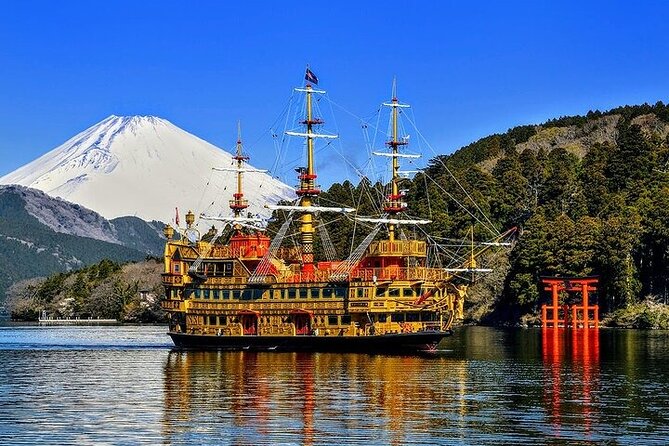
Lake Ashinoko, also called Lake Ashi, is in the Hakone area of Kanagawa Prefecture. This is the portion that shifts from pure Fuji-lake scenery into Hakone’s softer, more vacation-style atmosphere.
You’ll spend about an hour here. The tour notes that you can experience a pirate cruise at Lake Ashi, if your day includes a Fuji-and-Hakone style itinerary. So treat this as an option: if the driver has flexibility in timing, you may be able to add it during this stop window.
Even without a cruise, Lake Ashinoko is about views—mountain silhouettes, calm water, and that “we’re closer to the holiday mood” feeling that Hakone is known for.
Gotemba Premium Outlets: useful extra time if shopping matters
Gotemba Premium Outlets is optional. If you want it, talk to your driver in the morning so the timing works. Your stop here is listed as one hour, and the entry is described as included.
This is best for two kinds of travelers:
- You want a controlled shopping block at the end of a long sightseeing day
- You need a break from walking and stairs
If you’re trying to maximize Fuji viewpoints only, you may decide to skip it. There’s no rule you must do every stop, and private tour flexibility is part of why you chose this format.
Who this tour suits best
This works best if you want a single-day loop that hits the big name Fuji and Hakone viewpoints without the hassle of coordinating trains, buses, and transfers. It’s also a good match for:
- Small groups up to 5 people who want to split the cost
- People who care about photo planning and want an English-speaking guide to steer you
- Travelers who are short on time but still want the “classic Fuji” hits (Oshino Hakkai, 5th Station area, Kawaguchiko, and Arakurayama)
It might be less ideal if:
- You hate long days and lots of walking
- You’re extremely weather-sensitive and can’t handle the possibility of cloudy or rainy conditions
- You want a slow, self-guided pace where you linger without a schedule
Should you book this Mt. Fuji and Hakone private tour?
I’d book it if you value convenience, viewpoints in one day, and a driver who can adjust. At $540 per group, it becomes much more reasonable when you fill the group size, and the included parking fees plus private transport reduce friction.
I’d pause if you’re traveling solo and your priority is spending hours at one location rather than hitting multiple “must-see” areas. Also, if you’re set on the 5th Station drive experience in winter, remember the Fuji Subaru Line can face snow-related partial closures, and seasonal rules can limit private-vehicle access.
If you want a Fuji day that feels guided, efficient, and photo-friendly—this is a strong option.
FAQ
What time does the tour start, and when do we get back?
The tour starts at 8:30am and you’ll be dropped off at your hotel by about 6:30pm.
How long is the Mt. Fuji and Hakone private tour?
It runs about 10 hours (approx.), including travel time.
What does the $540 price include for a private group?
The tour price is $540 per group (up to 5). It includes an air-conditioned vehicle and parking fees.
Is lunch included?
No. Lunch is not included.
Are entrance fees included at every stop?
Not all of them. The Mt. Fuji 5th Station admission is listed as not included. Other listed stops are marked as free, and Gotemba Premium Outlets is listed as included.
Can I cancel if plans change?
Yes. You can cancel up to 24 hours in advance for a full refund.