REVIEW · SAITAMA PREFECTURE
Easy for everyone! Now you can play handmade mini shamisen and show off to everyone! Musical instruments, sweets and live music
Book on Viator →Operated by TOKYO SHAMI · Bookable on Viator
A shamisen you can hold from day one. In a relaxed tea-room setting near Tokorozawa Station, you build a handmade mini shamisen kit, learn simple music, and finish with a live concert plus sweets.
I love that it’s truly beginner-friendly, with instructions timed so even elementary-school age can follow along. I also like the small group size (max 4) and that you take the instrument home, plus the sheet music you practiced.
One thing to think about: this experience needs good weather, and the start time is set at 1:00 pm at Tokorozawa Station (pickup is offered, so you’ll want to coordinate).
In This Review
- Key highlights worth your attention
- Why this mini shamisen workshop feels different from a typical class
- The house-room start: happi coat, quick shamisen background, then you build
- The 20-minute build: where the learning really starts
- Turning build into music: reading the score and holding the notes
- Group practice and the moment it feels like real playing
- The tea break: live shamisen performance with sweets
- What you take home: instrument plus sheet music (real value)
- Price in plain terms: what $182.09 buys you
- Where you go, how you start, and what to plan around
- Who should book this mini shamisen workshop
- The teaching tone that makes beginners stick with it
- Should you book TOKYO SHAMI EXPERIENCE?
- FAQ
- What is the meeting point for TOKYO SHAMI EXPERIENCE?
- What time does the workshop start?
- How long is the experience?
- Is pickup available?
- Is this workshop beginner-friendly?
- What is the minimum age to participate?
- Can I take the mini shamisen home?
- What happens if the weather is bad or I need to cancel?
Key highlights worth your attention
- Mini shamisen kit assembly is fast: you put it together in about 20 minutes.
- Numbers on the instrument guide your hands so reading and holding notes feels doable.
- A happi coat makes it fun and easy to get into the mood without needing any costume effort.
- Practice happens as a group with a simple shamisen score you can learn.
- You’ll watch live shamisen with tea sweets as a musical break during the workshop.
- You take everything home: the handmade mini shamisen and the sheet music you used.
Why this mini shamisen workshop feels different from a typical class
Japanese music workshops can go two ways: either you sit and watch for a long time, or you do a lot but don’t get to keep anything. This one hits a sweet spot because the focus is on making, playing, and taking your own instrument home.
You meet near Tokorozawa Station in Saitama at 1:00 pm, and the session runs about 2 hours. The setting is a calm, Japanese-style room in a tea teacher’s house, so the vibe is closer to a cultural appointment than a factory-style activity.
If you like hands-on learning, you’ll enjoy how quickly the experience moves from explanation to action. You also might get a bit of international exchange, since the workshop is described as a hands-on option for many foreigners.
You can also read our reviews of more tours and experiences in Saitama Prefecture.


The house-room start: happi coat, quick shamisen background, then you build
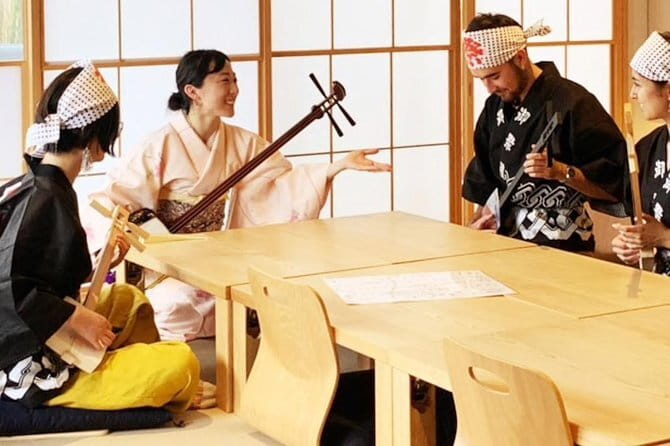
The workshop begins with you putting on a happi coat—an instantly recognizable part of Japanese performance culture. It’s a small detail, but it helps you drop into the experience without needing to guess how to act or where to look.
Next comes a brief explanation of the shamisen: what it is and the basics behind it. This is a good pacing choice because you’re not expected to memorize a textbook before you touch an instrument. You just get enough context to understand what you’re building and why it makes the sound it does.
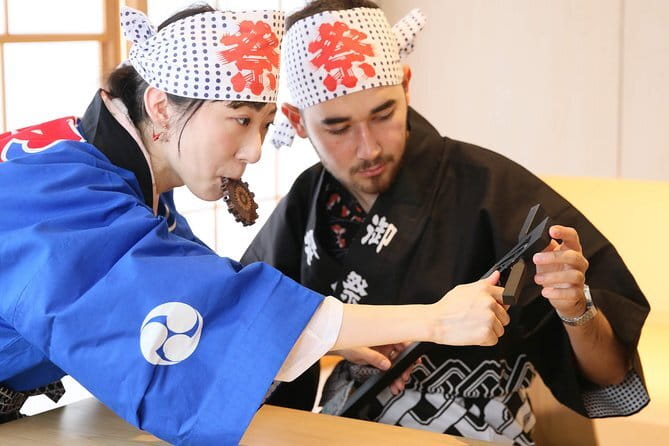
Then you move into the kit. You’ll assemble the mini shamisen using an introductory kit, and you’ll be shown the parts and how to set things up. The nice part: it’s described as not difficult, with the same approach used by people as young as elementary school students.
Assembly takes around 20 minutes, which means you’re not stuck waiting for the fun. It also means you’ll likely leave with the sense that you actually made something real, not just participated in a short demo.
The 20-minute build: where the learning really starts
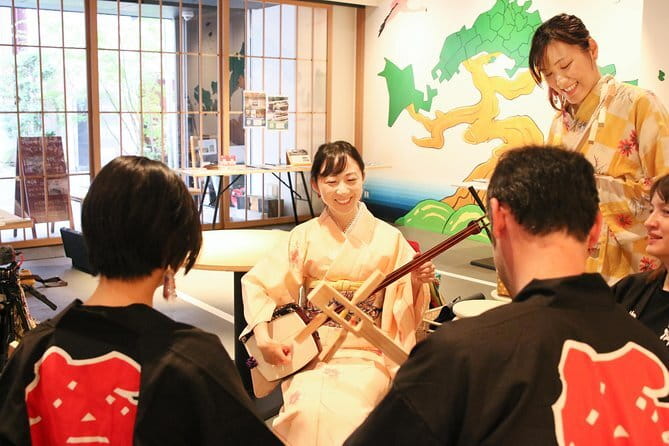
The workshop has a practical method: you see what the kit should look like, including key elements like how lines and parts are arranged, and then you try it yourself. That trial-and-build format matters because shamisen basics make more sense after your hands have done the steps once.
You’ll be building a mini shamisen, not a full-size instrument, which is part of why this works well for first-timers. The goal isn’t to train for years in one afternoon; it’s to help you understand how the instrument comes together and how your setup affects the sound.
A big help here is that the workshop is designed as an approachable entry point. If Japanese instruments feel intimidating because of tradition or technique, this structure takes the pressure off. You’re learning the instrument’s logic step by step, not trying to leap to performance-level skills.
Turning build into music: reading the score and holding the notes
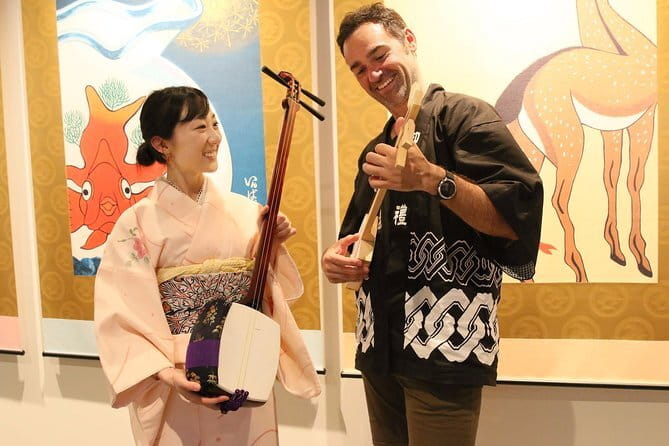
Once your shamisen is assembled, you start making sound right away. You’ll learn how to read music for the workshop’s simple approach, and you’ll practice the movements that match the notes.
Here’s what makes it click: the mini shamisen has numbers on it that indicate where to hold. For beginners, that’s huge. You’re not decoding everything at once; you can connect the written cues to physical placement fast.
Your group will practice a song together. The score is described as very simple, and because of that, you spend more time getting comfortable with the instrument than getting stuck trying to translate complex notation.
Even if you’re nervous at the start, the workshop is set up so you can follow along. The experience specifically frames itself as a first shamisen try, so the teaching style is built around clarity and patience rather than speed.
Group practice and the moment it feels like real playing
In many instrument workshops, everyone learns alone and the room feels quiet and awkward. Here, you practice together, which changes the energy. You’re listening to each other while also learning your own part, so you get feedback through the soundscape of the group.
That shared practice also helps you find rhythm. The teacher guides you through the steps, and because the mini-shamisen score is approachable, you’re not constantly guessing. You’ll likely feel a sense of progress within the workshop rather than waiting until the end.
The small size matters, too. With a maximum of 4 people, you’re not just part of a crowd. You can ask questions and get help without the teacher needing to rush across multiple stations.
And if you’re coming for a unique Japanese experience—something more memorable than a single-photo moment—this is where you’ll feel it. You’re not only learning Japanese culture in theory; you’re producing the sound.


The tea break: live shamisen performance with sweets
Midway through the session, you take a break. You’ll listen to a live shamisen performance while enjoying tea sweets.
This part is more than a pause. It gives you a contrast between your beginner-level playing and what the instrument sounds like when performed. Even a short live moment like this helps you understand what to aim for next, and it gives you something calming to focus on after the hands-on build and practice.
It also turns the workshop into a mini evening of Japanese performance culture, even though it’s scheduled for a shorter 2-hour window. You get both participation and appreciation.
The tea-and-sweets moment is also a practical win. It helps you reset your attention so the end feels satisfying rather than rushed.
What you take home: instrument plus sheet music (real value)
This experience ends with a big payoff: the handmade mini shamisen goes home with you. Along with it, you also receive the sheet music you practiced.
For value, this is a key difference. Many workshops are “fun today” but don’t leave you with anything concrete. Here, you leave with a physical instrument you can practice with after your trip.
You’ll also have the exact guide for the simple song you practiced, which lowers the barrier when you try it at home. You won’t have to remember everything from the lesson by guesswork.
Think of it like this: the cost isn’t only for instruction time. It also includes the materials and the experience design that gets you to a playable result you can keep.
If you want something that you can show family and friends—without relying on a photo alone—this setup is made for that. You can put the shamisen on the table later and say you built and learned it in Saitama.
Price in plain terms: what $182.09 buys you
The listed price is $182.09 per person for about 2 hours, including instruction, a live performance moment, and the take-home instrument and sheet music. When I look at value, I focus on what you get at the end, not only how long it lasts.
In this case, you’re buying three things at once:
- a guided beginner instrument-making experience
- a chance to play with a simple structure and support
- an object you keep (mini shamisen) plus the notes you practiced
If you only wanted to hear shamisen, a concert ticket would be cheaper. But if you want the hands-on learning and a take-home instrument, the price makes more sense. You’re not just attending; you’re participating in the full arc.
Also note that the workshop has a small cap of 4 people, so you’re likely getting more individualized attention than you would in a larger class. That small-group element is part of what helps beginners succeed.
Where you go, how you start, and what to plan around
Your meeting point is Tokorozawa Station in Saitama Prefecture, starting at 1:00 pm. The experience is near public transportation, and pickup is offered, which can help if you’re juggling rail connections or carrying other bags.
The workshop uses a mobile ticket, so plan for that on your phone. The session also has confirmation at booking, so you’ll know what to expect before you show up.
Weather matters. This experience requires good weather, and if it’s canceled due to poor conditions, you’ll be offered a different date or a full refund. That’s the kind of detail you want to respect, especially if you’re squeezing the activity into a tight day.
Who should book this mini shamisen workshop
This is a great fit if you want a Japanese cultural activity that’s hands-on and unusual. It’s also a strong option if you’ve been curious about Japanese instruments but felt blocked by the difficulty barrier—this is built for first-timers.
You’ll also like it if you want a fresh skill that feels different from the usual calligraphy or cooking class. A shamisen is distinctive, and the fact that you can take one home makes it easier to keep practicing later.
Age-wise, it’s described as elementary school students or more, and most people can participate. The workshop’s structure supports beginners, including people who don’t read music in Japanese or don’t have instrument experience.
The main mismatch is if you’re looking for a longer sightseeing day or an intense performance training track. This is designed as a friendly entry workshop, not a conservatory course.
The teaching tone that makes beginners stick with it
A good beginner experience depends on teaching style. In this case, the workshop is described as having a kind, patient teacher who explains the shamisen history clearly and supports you through building and playing.
The approach is practical: you get the explanation, then you assemble, then you play. And when you’re practicing a simple score together, you’re not left on your own to figure it out.
That kind of pacing helps you feel capable quickly. If you’ve ever tried a traditional craft experience and felt lost halfway through, you’ll appreciate the structure here.
Should you book TOKYO SHAMI EXPERIENCE?
Book it if you want a real skill, not just a photo. The take-home mini shamisen plus the sheet music you practiced is the big deciding factor, and the small group size (max 4) makes it more likely you’ll leave confident.
Skip it if you only want a passive cultural outing, or if your schedule is so tight that a weather-dependent activity at a fixed time would be risky. Also, if you’re searching for a huge, city-style tour, this is intentionally a calm, instructional workshop day.
If you’re in Saitama or Tokyo’s orbit and you want a memorable Japanese instrument moment you can actually keep using, this is one of the best “start something new” activities around.
FAQ
What is the meeting point for TOKYO SHAMI EXPERIENCE?
You meet at Tokorozawa Station in Saitama, Japan.
What time does the workshop start?
The start time is 1:00 pm.
How long is the experience?
It lasts about 2 hours.
Is pickup available?
Yes, pickup is offered.
Is this workshop beginner-friendly?
Yes. It’s designed for first-time shamisen experiences.
What is the minimum age to participate?
Participation is for elementary school students or older.
Can I take the mini shamisen home?
Yes. You take the handmade mini shamisen and the sheet music you practiced home.
What happens if the weather is bad or I need to cancel?
The experience requires good weather. If it’s canceled due to poor weather, you’ll be offered a different date or a full refund. For cancellations, you can cancel up to 24 hours in advance for a full refund.